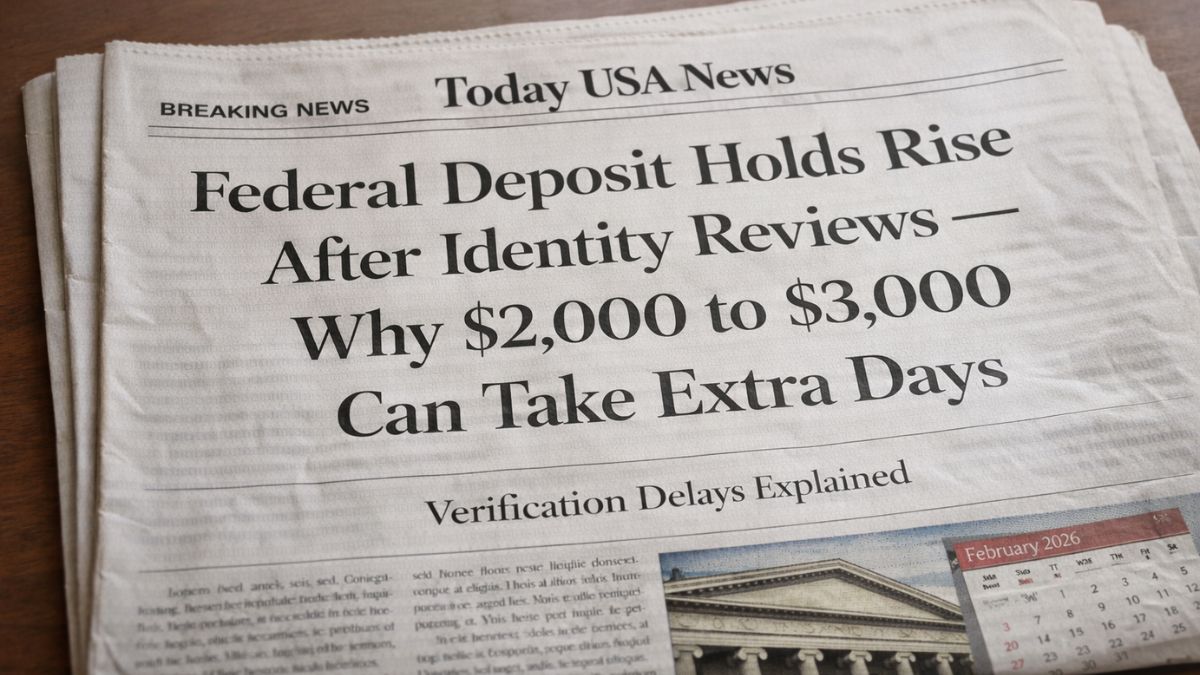
In early 2026, many Americans waiting for federal deposits are noticing unexpected delays. Payments expected in the range of $2,000 to $3,000 are sometimes marked as pending, temporarily unavailable, or delayed even after showing initial approval. This situation has caused worry for households that depend on these funds for essential expenses. According to officials, these delays are usually not payment failures but part of additional verification checks.
Why Verification Is More Detailed in 2026
Federal agencies, including the Internal Revenue Service, rely on automated systems to process payments. However, identity verification remains a critical step. In 2026, these checks have become more detailed to reduce fraud, duplicate claims, and incorrect deposits. Even small issues such as name mismatches, recent address updates, or minor differences in records can trigger a temporary review. These checks are meant to protect recipients, not delay payments unnecessarily.
यह भी पढ़े:
 Federal Deposit Rules Update for 2026 — Why $2,000 Can Become $1,200 to $1,400 After Review
Why Mid-Range Payments Get Extra Attention
Payments between $2,000 and $3,000 often receive closer review because they usually include multiple components. These amounts may combine tax credits, adjustments, or delayed payments processed together. Since several factors are involved in calculating the final total, the system may pause the deposit to confirm eligibility and accuracy. This review does not mean the payment will be denied. It simply means the process is more careful.
How Banking and Personal Changes Affect Timing

One of the most common reasons for a hold is a recent change in banking information. Updating account numbers, switching banks, or changing routing details can automatically trigger verification. Address updates, filing status changes, or corrections made after submitting forms can also slow processing. These pauses are built-in safety measures designed to prevent money from being sent to the wrong place.
Why Online Trackers Often Show Limited Information
Payment tracking tools do not always show detailed reasons for delays. When a deposit is under internal review, the tracker may only show a general status. This can make it seem like nothing is happening, even though the payment is still moving through final checks. In many cases, once verification is completed, the funds are released without further notice.

Security Efforts Behind the Delays
Officials explain that these extra steps are part of broader efforts to protect public funds. Fraud attempts have increased in recent years, leading agencies to strengthen security systems. While this can slow some legitimate payments, it helps prevent larger losses and incorrect deposits overall.
What Recipients Should Do While Waiting

In most situations, patience is the best option. Making repeated changes or resubmitting information can extend the review period. Keeping personal and banking details consistent helps processing move faster. If an official request for verification appears, responding quickly can prevent further delays.
What Happens Next
Most identity-related holds are resolved within a few business days. Once cleared, deposits usually reach accounts quickly. Understanding why these delays happen can reduce stress while the system completes its checks.

Disclaimer: This article is for informational purposes only and does not provide financial, legal, or government benefit advice. Federal deposit timelines, verification rules, and payment schedules may vary based on individual circumstances and policy updates. Readers should rely on official government notices or agency websites for accurate and up-to-date information regarding their payments.